History and Origins of Paella
Paella is one of the most popular and famous of global dishes, to define exactly what paella contains is almost impossible. There are as many variations of paella as there are cooks, with many claiming that their recipe is the best tasting or most authentic. The origins of the dish, however, are quite humble. Understanding a little of its history will help explain why so many varieties exist.
Valencia in Eastern Spain is the undisputed home of paella. It is one of the largest natural ports in the Mediterranean and has been one of the most important rice-producing areas in Spain since rice was introduced by the Moors over 1200 years ago. In fact, the Spanish word for rice is ‘arroz’, which is derived from Arabic, not Latin like most of Castilian Spanish.
Humble Beginnings
Paella was originally farmers’ and farm labourers’ food, cooked by the workers over a wood fire for the lunchtime meal. It was made with rice, plus whatever was to hand around the rice fields and countryside: tomatoes, onions and snails, with a few beans added for flavour and texture. Rabbit or duck might also have been added, and for special occasions, chicken plus a touch of saffron for an extra special colour and flavour. Paella was also traditionally eaten straight from the pan in which it was cooked with each person using his own wooden spoon.
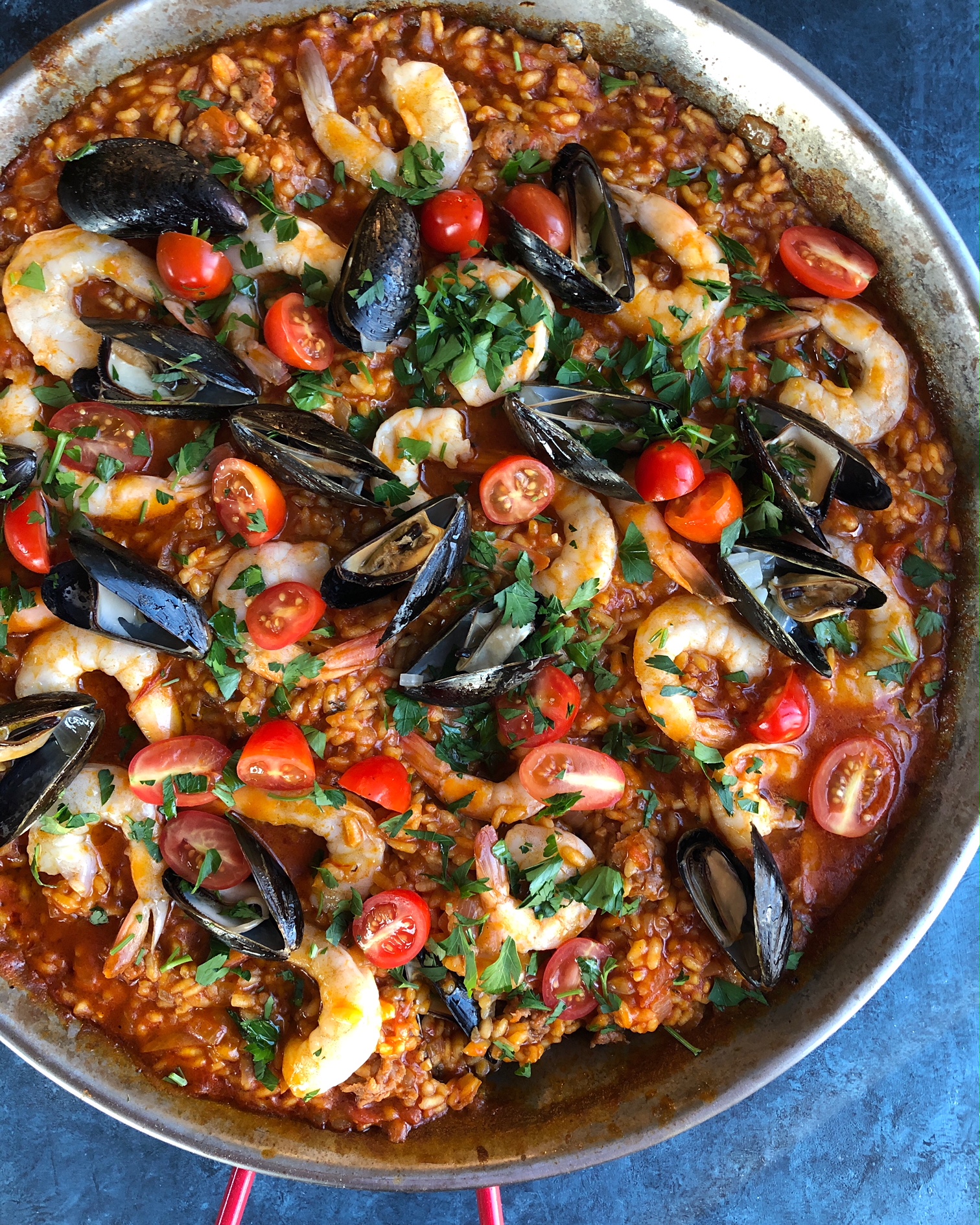
Little by little, as ‘Valencian rice’ became more widely available, paella recipes were adapted with new variations appearing. With Valencia being on the coast, it is no surprise that various types of seafood crept into the recipes over the generations. Now paella is the generic name of 200 or so distinctive rice dishes or ‘arroces’ from the Valencia region let alone other parts of Spain and the rest of the world. To this day a “true” Paella Valenciana has no seafood but a mixture of chicken, rabbit and snails with green and white beans.
 Spanish food